
Was there a gay revolution in Northampton? A look at the gay subculture that existed here just before 1970 may help answer that. I am still looking for and surveying existing literature but here’s a summary of one piece of research.
Lack of documents is one thing noted by Vincent Bonfitto in his 1990 search for Valley gay history prior to the modern gay and lesbian political movements. Only by interviewing seven older gays and lesbians (all of whom may have been white), including Warren Clark and Jean Grossholtz, for his Master’s thesis at UMass was he able to add a little to our sparse knowledge of post-WWII Valley gay subculture.
In general he found this subculture was largely limited to very private social networks meeting in each others homes; and, often isolated individual couple relationships. Gays and lesbians in this era often had to go out of town to find venues for meeting each other. The experiences of men and women and their subcultures differed in significant ways.
Those interviewed by Bonfitto noted that social life for gay male academics centered around private Smith College cocktail parties and trips to Jacob’s Pillow dance center in Becket MA in summer. Gay male social life was absent at Amherst College, where a gay male faculty member had been asked to resign in the 1950s. No information was included on UMass, except that couples existed. One social network consisted of gay priests in the diocese. Three of the four men interviewed had lost jobs because of homosexuality, one not rehired at Amherst High School in 1962 for, among other things, being “effeminate.”
Gay men in the Valley cruised public facilities for anonymous sex in Amherst, Holyoke, and Greenfield, as well as Northampton. The largest cruising grounds familiar to the men were in Springfield, including the lobby of the Bridgeway Hotel, a huge public men’s room next to City Hall, and the park behind Old First Church off Court Square.
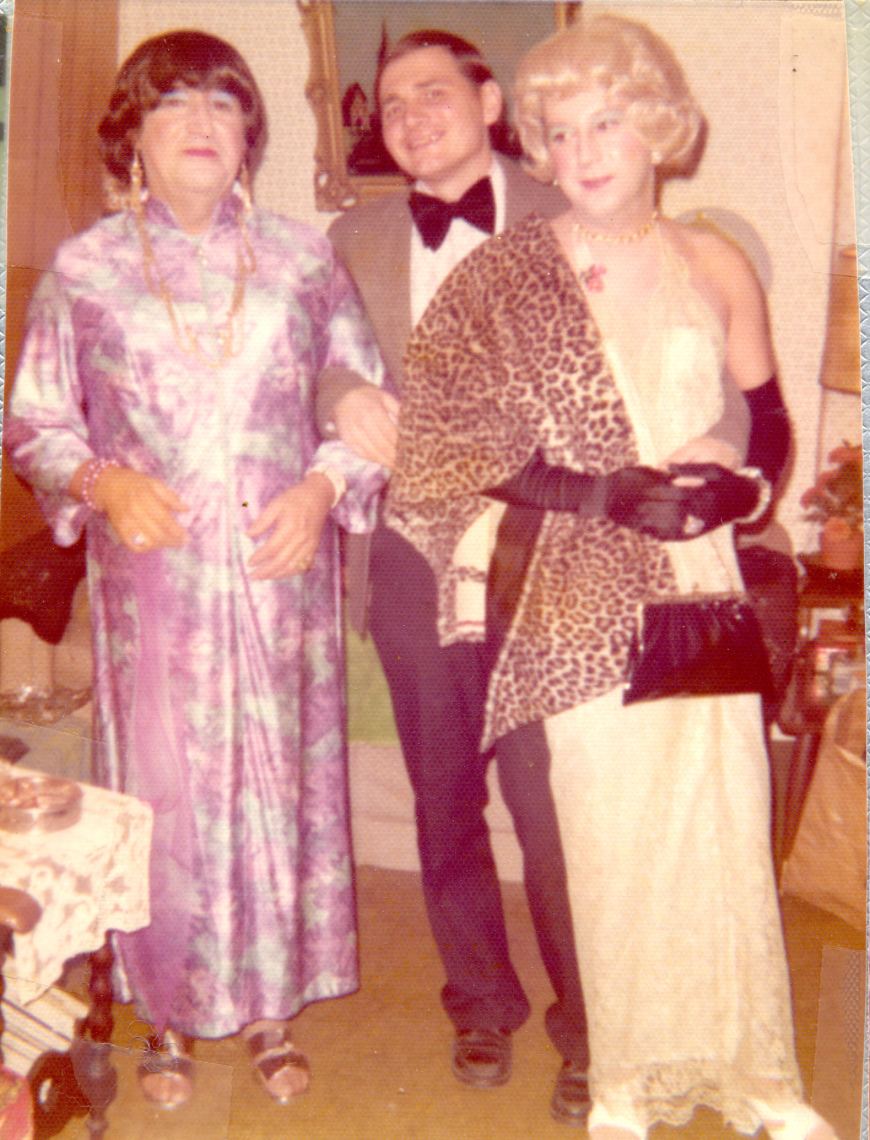
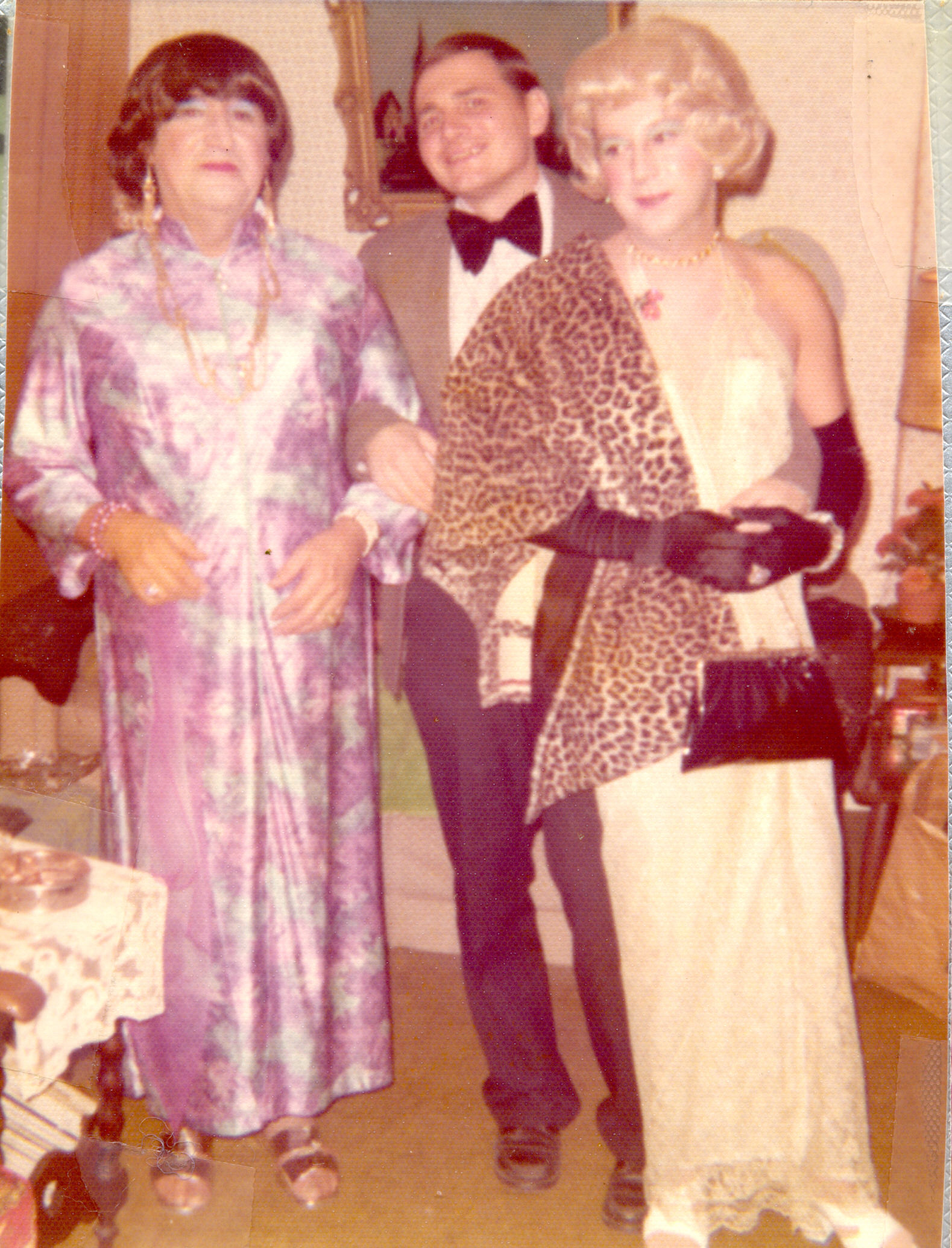
The nearest gay bars were also in Springfield. Though they occasionally were visited by gay women, they were largely for men, with varying clientele. The fourth floor bar and restaurant Blakes was run like a private club, very “high class,” and had drag balls during the holidays. The Arbour was a formal, “posh” piano bar for the over-thirty crowd, while the Arch and Sports Lounge were more informal and mixed class. The Arch, in particular, was known as a pickup place. Bonfitto doesn’t mention the race of bar patrons, the location of the bars, or dates of existence.
Gay women’s or lesbians’ culture appears to have been much more restricted and largely separate from the men’s. Throughout his thesis, Bonfitto refers to the women as “lesbians,” with no note of the actual self-referents of those he interviewed. The three women noted very closed social networks, little bar attendance, but the known existence of a reputed butch-femme bar culture with alcohol-fueled violence. At Mt. Holyoke College, students who came out (were discovered) were moved by the administration to live by themselves in single dorm rooms or off campus. The only alternative to the Springfield bars mentioned above, for women, was attendance in Boston at Daughters of Bilitis events and vacationing in Provincetown.
Aside from Bonfitto’s thesis there are a few other published sources I have yet to review that contain bits about this period. Some scraps have come my way. I was told by a Smith College alumnae who came to live at Green Street in the early 70s that she had been suspended for a semester and sent home to get psychiatric treatment because her feelings for another woman became apparent to others.
In 1969, among the many old WAC friends who visited my partner Susan and me in Williamsburg, was a gay female couple then living in New York. They brought the portentous news that one of them was transitioning to male. Because of Susan’s regular correspondence with Ladder editor Barbara Grier, our friend Karl (literary pseudonym) wrote what may have been the first article on transsexuals published by the magazine. In 1972, the couple, now legally married and with an adopted child, moved to Northampton and totally assimilated.

The semi-rural nature of the Valley and the generally small size of towns, even those with academic institutions, undoubtedly contributed to the very private and often isolated existence of gay people in Northampton and the area prior to 1970.
What began to change and how it happened are the topics of the next series of blogs on the 1970s. I am very much looking forward to getting my personal copy of Lillian Faderman’s new history the Gay Revolution. It’s been given fine reviews and I’m sure, like the other volumes I have of her work, I will underline, highlight and scribble madly in its margins. A timely publication that can be referred to as we lay out the story of the revolution here in the Valley. Stay tuned in!
COMING NEXT: A Kind of Revolution: Overview.
SOURCES:
__Bonfitto,Vincent F. “The Formation of Gay and Lesbian Identity and Community in the Connecticut River Valley of Western Massachusetts, 1900-1970.” Journal of Homosexuality, Vol. 33(1) 1997, 69-96. Haworth Press. I will include more material in future blogs.
__Ericsen, Karl. “The Transsexual Experience.” The Ladder, Apr/May 1970, 25-27. Daughters of Bilitis, San Francisco.
FUTURE WORK? LOOKING FOR: I have also been told about, but not yet verified and researched, semi-pro women’s baseball and basketball teams in Springfield, and a Valley-wide industrial women’s softball league that may have existed in the 1960s. Who knows about this? Also were there male equivalents? Or bar leagues as have been found in other large cities? Does anyone know the location of the Springfield bars mentioned by Bonfitto, or (pie in the sky) have photos? I will post a blog soon on the Girls Club, lesbian bar in Chicopee started in the 1940s.
 From Wicked To Wedded