Famous Guests: Hampshire Bookshop, part three


On the occasion of the Bookshop’s twentieth anniversary in 1936, the Daily Hampshire Gazette printed a historical summary written by co-founder and manager Marion Dodd. Included was a list of more than fifty poets, playwrights, critics, or academics whose presentations in Northampton were produced by HBS. Among the many literary luminaries such as William Butler Yeats, Archibald MacLeish and Robert Frost who appeared as Hampshire Bookshop guest lecturers are some authors of particular interest to this blog.

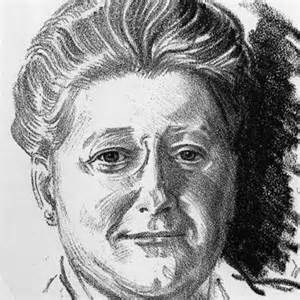
Amy Lowell sketch (Pinterest)

One of the staunchest supporters of the store was Boston Pulitzer Prize poet and critic Amy Lowell. Lowell was large, cigar-smoking, and openly lesbian. She lectured at least five times for the Bookshop, including at least once on Walt Whitman.

Ada Dwyer-Russell (Pinterest)

Lowell’s partner Ada Dwyer Russell also lectured there.

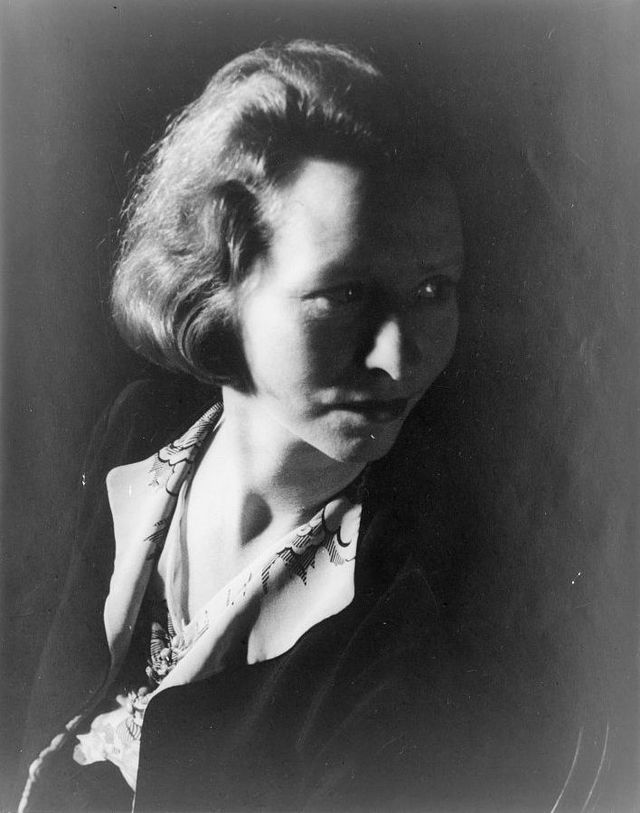
Further representing American literature via the Hampshire Bookshop were the playwright and novelist Thornton Wilder and openly bisexual poet Edna St. Vincent Millay.

Thornton_Wilder_-_1948
Thornton Wilder (Pinterest)
Edna St. Vincent Milay (Pinterest)
Edna St. Vincent Millay (Pinterest)

In the 1950s, Truman Capote promoted Breakfast at Tiffany’s here.
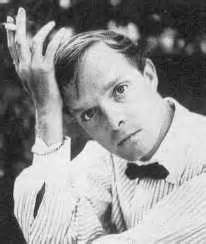
Truman Capote (Pinterest)

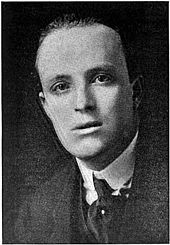
British writer Vita Sackville-West, who was at one time Virginia Woolf’s lover, lectured here, as did the bisexual man she was in an open marriage with, Harold Nicolson.  British novelist Hugh Walpole gave multiple lectures on Modern literature. This friend of Woolf and Henry James was gay, and had defended The Well of Loneliness at its obscenity trial in British court.
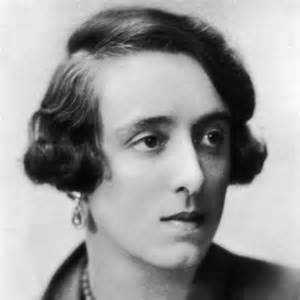
Vita Sackville-West (Pinterest)
Hugh Walpole (pinterest)

Sources:
__Dodd, Marion E. “Hampshire Bookshop Has Had Interesting History; Marks 20th Anniversary.” Daily Hampshire Gazette. Northampton MA. April 17, 1936.
__Wikipedia has an incomplete list of better known LGBTQ people with individual entries for each of the lecturers briefly included here.

Coming Next:
Hampshire Bookshop, part four: Changes and Closing
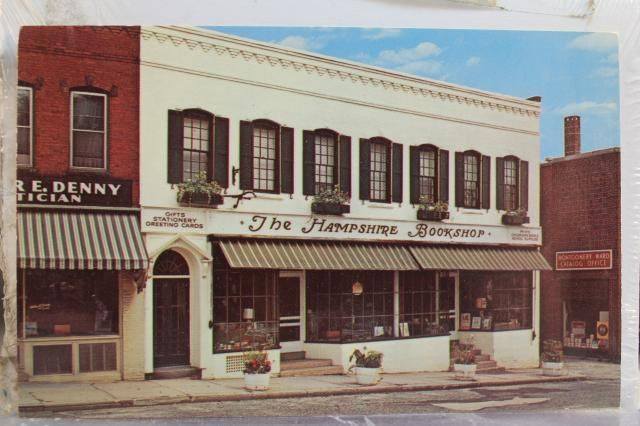
The Founders: Hampshire Bookshop, part two


“The Hampshire Bookshop (1916-1971) existed within, and helped create, a culture amenable to the bluestocking women who managed, staffed, and patronized it,” concludes the HBS’s historian Barbara Brannon. “This culture extended to the ease with which women, whether married or single could fit into all aspects of community life and manage their own affairs. Then as today, Northampton represented a welcoming environment for independent women and for lesbian couples (though it is doubtful that most of the women of Marion Dodd’s generation who shared their lives with longtime companions would have applied the term to themselves). The homosocial network, of which the Hampshire Bookshop was a central part, encouraged the freedom of women through mutual support.”

hampshire bookshop
The Hampshire Bookshop, 8 Crafts Avenue (Historic Northampton)

The two Smith College alumnae most responsible for the birth and initial health of the Bookshop, Marion E. Dodd and Mary Byers Smith, returned to Northampton when they were in their thirties to begin the creative business venture. Dodd rented an apartment in town and Smith commuted from her family home in Andover. Though a biography of the HBS’s personnel wasn’t the purpose of Brannon’s dissertation she notes that a history of HBS is “inseparable from the personalities of those who made it” and offers much information not available elsewhere.

Marion Dodd, from a NYC family in the booktrade, was the Hampshire Bookshop’s driving force throughout most of its existence, actively managing the HBS from its 1916 beginning until her retirement in 1951. Dodd also become one of the first (and most influential) female members and officers in the American Booksellers Association. She mentored many HBS staff who went on to their own careers in the trade.

Brannon calls Dodd “in many ways a pioneering woman in the male-dominated world of books. She envisioned herself as following in the footsteps of the famous bookmen in her family, assuming her place in a patriarchal order. In the ‘gentlemanly’ field of bookselling ‘Miss Dodd’ conducted business in a thoroughly practical manner no different from that customary among male colleagues. In writing an anonymous column in the HBS newsletter The Book Scorpion Dodd used a masculine alter ego “the Scorp’. In her personal life, too, Dodd appropriated characteristics traditionally associated with men.”

Allison Lockwood reveals a little more of Marion Dodd’s character in her Northampton World War II history, Touched with Fire. In 1944 some Hatfield citizens objected to the introduction of workers from Jamaica to alleviate the agricultural labor shortage. This same year, Roy Wilkins, secretary of the National Association for the Advancement of Colored People, appeared at a forum sponsored by the Inter-race Commission of Smith College, where his topic was “Racial Tension and the War.”

In March of that year the Daily Hampshire Gazette noted: “Book Banned In Some Cities Now Is On Sale Here.” The flap was over Strange Fruit, a favorably reviewed novel which dealt with interracial love and the institution of lynching. The book was stocked at the Hampshire Bookshop and remained for sale there even when the business was threatened with possible legal action. In a letter to the Gazette Dodd responded, “We believe that mature buyers of books are entitled to use their own judgment as to what they wish to read. Censorship in this state has a checkered career, and this bookshop was influential…years ago in getting the clause in the Massachusetts law changed… Strange Fruit deals constructively with one of the most pressing problems at the present moment.” Unsurprisingly, to me,  she was a lifelong member of The Society of Friends Mt. Toby Meeting House, which occasionally held meetings for worship in the bookstore.

“Though the Bookshop certainly in many senses empowered women,” Brannon concluded that “it was never an overtly ‘feminist’ enterprise in the modern sense of the word nor in terms of the contemporary struggle for women’s rights… Instead its managers seem to have simply claimed from the outset an equal footing with men, in commerce, society, and politics.

Co-founder Mary Byers Smith was the daughter of Andover industrialists and philanthropists; she provided major financial backing for the Bookshop from a personal inheritance. She was also a poet who contributed a good deal to the literary character of the HBS. She wrote many essays for The Scorpion as well as much of the store’s publicity and catalog copy.

As president of the corporation for over a decade, Smith helped shape its goals and policies. Though she claimed she was never deeply involved in the Suffrage Movement, she marched in the 1916 Suffrage parade in Northampton and her progressive thinking is certainly reflected in some of bookstore’s unusual goals. These included “proving the aptitude of women for the book business; demonstrating that a college bookstore could sell more than textbooks, stationary and doughnuts; and making contacts between authors and their public.”

More on these women and others to come. I apologize for the lateness of this post. I had fully intended to get it out there shortly after HBS part one but it needed extensive editing and I was adjusting to the gardening season starting and, with it, my daytime job.

Sources:
__Brannon, Barbara A. “No Frigate Like a Book”: The Hampshire Bookshop, 1916-1971. Doctoral dissertation. University of South Carolina, 1998. Unless noted most of the information in this series of articles on HBS is drawn from this dissertation. Copies of it are available at Smith College and UMass/Amherst libraries. Brannon is in the midst of rebuilding her web page, I hope soon to be able to provide a link.  here it is  http://www.barbarabrannon.com/
__Lockwood, Allison M. Touched With Fire: An American Community in World War II. Northampton MA. Daily Hampshire Gazette, 1993. Source of the DHG photo identified in part one and the information on Dodd, censorship and racism c. 1944.
__”Robert Frost Is Guest At Bookshop’s Party.” Daily Hampshire Gazette, 17 Apr 1936.
Looking For: Photos of Dodd, Smith, Dunn and other HBS notables.
Coming next: The “unusual” guests: HBS part three

Hampshire Bookshop 1916-1971: Beginnings


Marion Dodd, a man’s shirt and tie showing under her overcoat, holds a large basket of gifts that Grace Coolidge, the former President’s wife, hands out to departing draftees at the Northampton train station sometime during World War II. This Hampshire Gazette photo highlights the public prominence of the woman long at the heart of the Hampshire Bookshop (HBS). “Her masculine style of dress and demeanor – tailored suit, four-in-hand tie, closely cropped hair, cigarette smoking, direct speech – are still remembered by those who knew her,” writes Barbara A. Brannon in her dissertation on the Hampshire Bookshop. “Dodd is also most frequently noted for her avid hobbies of woodworking, sailing, and motoring, and her longtime ‘Boston marriage’ with Smith Professor Esther Cloudman Dunn.”

While Brannon’s dissertation, “No Frigate Like a Book,” largely focuses on the Hampshire Bookshop’s pioneering endeavors and influence in the profession of bookselling on a national level, she has uncovered enough detail on the HBS to delineate a “homosocial network” (my emphasis) of former Smith classmates, other alumnae, faculty, and staff that the bookshop drew upon, strengthened and expanded as it became an important center not only of several generations at Smith, but also of literary activity in the region over its fifty-five year history. Brannon’s scholarly work is the source of much of the information that follows.

At least half of the bookshop’s staff and most of the board of directors had some association with Smith. Most were women. With this essential support, the Hampshire Bookshop boldly pushed the limits of what a bookstore could be. Beyond being one of the first woman-owned and managed bookstores in the country, HBS was successful at much more than selling books. The HBS also maintained a student cooperative that returned profit to members, published more than forty books and lecture pamphlets under its own imprint, and brought more than a hundred authors of national and international repute to Northampton to present readings and lectures.

Marion E. Dodd (Smith ’06) and Mary Byers Smith (Smith ’08) incorporated the bookshop in 1916 with initial support from two other Smith alumnae, Emma P. Hirth (Smith ’05) and Edith E. Rand (Smith ’99), who lived together in New York City. The four of them became the first Board of Directors and with 82 other stock holders gathered an initial $25,000 in capital. They leased space at 41 Elm St. in a house purchased by Rand as the agent for the Smith Alumnae Association (now Duckett House). The Hampshire Book Shop, as it was initially named, opened for business in three first floor rooms staffed by Dodd and Louise Bird (Smith ’16).

In its first two months, the student cooperative enrolled more than 1250 members, and within a year HBS had outgrown the space. In 1917, they rented space at 192 Main Street in Shop Row. The business expanded so rapidly that within five years they ventured to raise another $25,000 in capital through the sale of stock and purchased their own building, moving to 8 Crafts Avenue in 1923.

The HBS choose as its motto a poem by Emily Dickinson that begins, “There is no frigate like a book.” The bookshop especially promoted poetry. Poet Robert Frost was an appreciative guest speaker at its Crafts Avenue housewarming, as well at later celebrations,. The new store, which was to house the main business for the rest of its life, featured woodworking by Dodd as well as a second floor lecture and exhibit space that seated 125.


hampshire bookshop
Hampshire Bookshop, 8 Crafts Avenue , the Metcalf building (Historic Northampton)

Sources:
__Brannon, Barbara A. “No Frigate Like a Book”: The Hampshire Bookshop, 1916-1971. Doctoral dissertation. University of South Carolina, 1998. Unless noted most of the information in this series of articles on HBS is drawn from this dissertation. Copies of it are available at Smith College and UMass/Amherst libraries. http://www.barbarabrannon.com/
_____________________ “The Pioneering Journey of the Hampshire Bookshop: the First Ten Years.” In Paradise Printed and Bound: Book Arts In Northampton & Beyond. City of Northampton. 2004. A more accessible (try local library or WMRLS) and briefer summary that includes new financial detail as well as photos.
__”Hampshire Bookshop Incorporated at Boston.” Daily Hampshire Gazette, 29 Apr 1916.
__Smith, Mary Byers. “New Book Store In Elm Street House.” Daily Hampshire Gazette, 12 Apr 1916.
__”The Hampshire Book Shop.” Daily Hampshire Gazette, 2 Oct 1916.
__”An Hour In The Hampshire Book Shop.” Daily Hampshire Gazette, 6 Dec 1916.

Looking For: Photos of Dodd, Smith and others.
Coming Next: Hampshire Bookshop Founders Marion E. Dodd and Mary Byers Smith.

The Scarlet Professor


This is the first in a series exploring the gay subculture that existed in Northampton prior to the 1970 beginnings of a social revolution.

In the autumn of 1960, seven Northampton men were arrested and found guilty of a range of offenses that ultimately related to their being gay or bisexual. Three of them were on the faculty at Smith College. Two successfully appealed their convictions, and no one was imprisoned, but all the men’s lives were irrevocably changed by the public revelation of their sexuality.

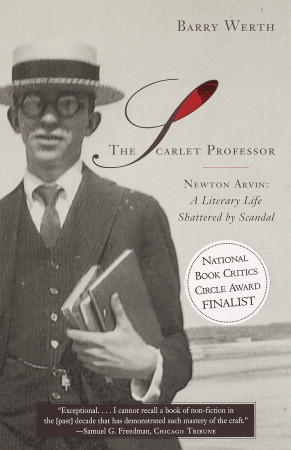
This event is chillingly recounted in Barry Werth’s biography of Newton Arvin, The Scarlet Professor. While the book’s focus is the scarlet prof cover102865Smith College professor, his intellectual work and how it intersected with his homosexual stigmatization, it also contains the first available portrait of gay male life in Northampton. Drawing on unprecedented access to Arvin’s private papers, Werth provides vividly detailed information on Arvin’s social network, his feeling of isolation within the small town of Northampton, the excitement and concurrent risks of cruising the gay “demimonde” in Springfield, and the repressive social climate of the 1950s.

The only really lighthearted content is found in the descriptions of Arvin’s very young lover Truman Capote getting off the train in ’Hamp and racing across town trailing a long, fluttering scarf to Newton’s Prospect Street apartment. Or Truman’s going into

McCallums Department Store (Historic Northampton)

McCallums department store on Main Street to, scandalously, buy a pink sweater in the Ladies Department. Arvin met Capote in 1946 at Yaddo, the writers’ colony, and they had a three-year affair before continuing as friends.

Truman introduced Arvin, who was much older and had struggled with his sexuality through a failed marriage and psychiatric treatment, to New York City’s gay subculture. Newton went on to explore the closer underground world in Springfield, often cruising the bus station and the Arch, a gay bar known for rougher trade. He also entertained younger men in his apartment, sometimes sharing with individuals and small groups his collection of homoerotic material. There appears to have been little social interaction with gay Smith faculty women.

Other than these small private gatherings, gay male life within Northampton as recorded by Arvin in his diaries was limited to cruising the men’s rooms at the City Hall and bus station in order to arrange anonymous sexual encounters. In 1956, a visiting professor at the college had been fired when caught by police having sex in a car with a boy who may have been a minor.
Early in 1960, toward the end of the McCarthy era, the U.S. Congress authorized the Postal Service to inspect and seize mail that the Postmaster General deemed obscene. As part of this national anti-“smut” campaign, Massachusetts made its distribution a felony and formed a special investigative unit headed by Sergeant John Regan of the State Police. Included in the list of banned material were male “beefcake” magazines and the newsletter of a homosexual civil rights organization.

Arvin
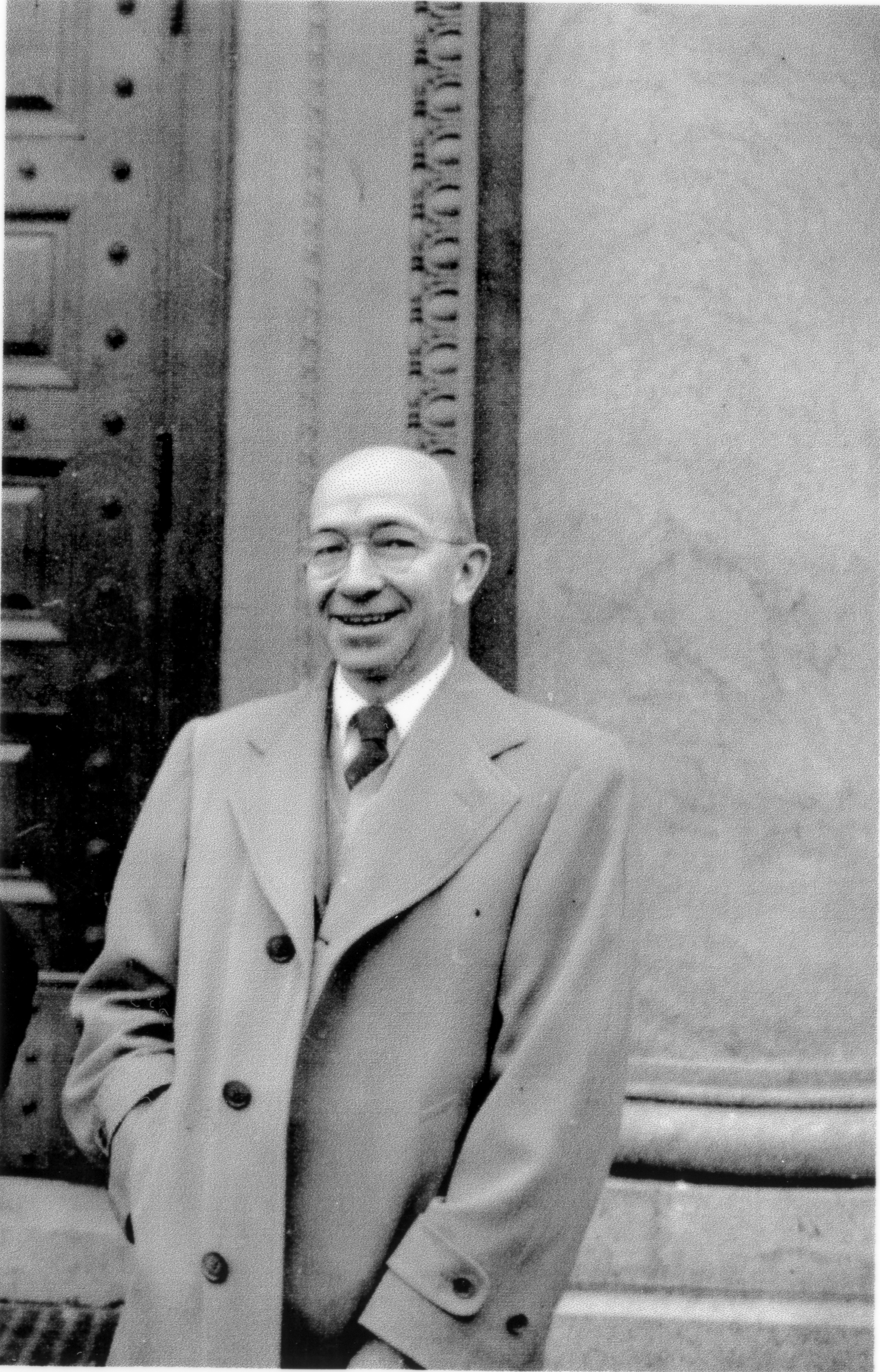
Newton Arvin, 1951 (Smith College Archives, Northampton MA)

As recounted by Werth, on September 2, 1960, state and local police led by Regan raided Arvin’s apartment on a tip from the Post Office. They confiscated his erotica and diaries dating back to 1940, and arrested him for distributing pornography. Shattered, Arvin surrendered the names of several friends, including Smith instructors Ned Spofford and Joel Dorius, then admitted himself to  Northampton State Hospital.

The head of the vice team, Regan, anticipated breaking a major interstate ring of “smut-peddlers” centered at the prestigious women’s college. He trumpeted his finds and plans to the press, which resulted in daily headlines in the Boston and New York newspapers. A wave of fear spread through the East Coast gay grapevine as Arvin’s name was recognized. Regan publicized that Arvin’s diaries were being scrutinized with dozens of arrests expected around New England. Men cleaned their houses of explicit material, feared their phones were tapped, and left town or otherwise distanced themselves from the accused.

As six more arrests followed, police revealed to the public that Arvin and the other suspects, including three married Northampton men, were homosexuals. As all seven men were convicted and given suspended sentences for possessing obscene material, and/or being lewd and lascivious persons or committing unnatural acts, it became apparent that no distribution of pornography had taken place. The men had merely shown each other their private collections or had sex in the privacy of their homes. Werth concludes that the overzealous investigator had stitched together a gauze of half-truths in hopes of gaining attention in Boston for the fledgling vice unit’s efforts. Regan and the state police had simply dragged a net through Northampton’s underside, entangling seven unfortunate men.

Dorius
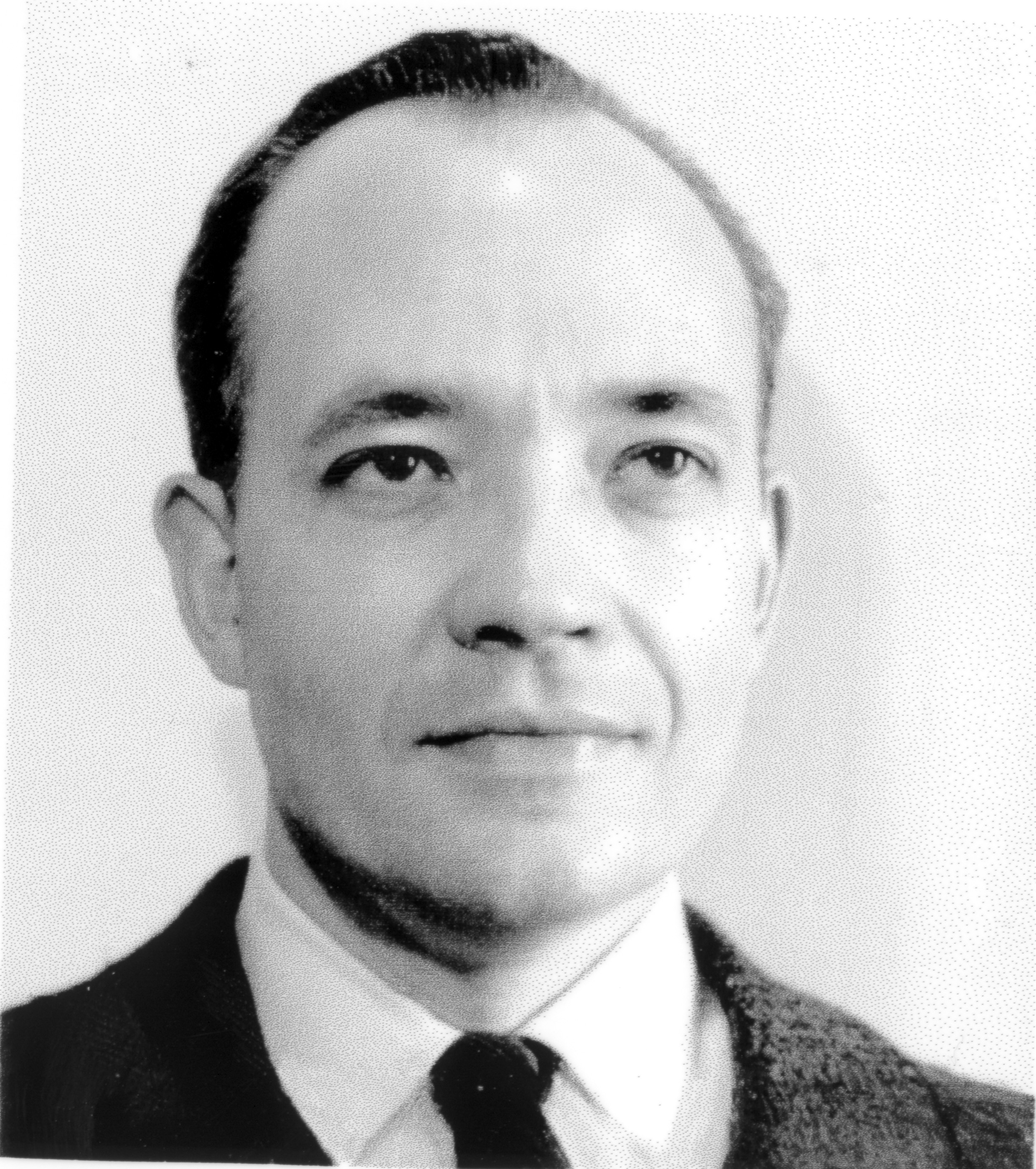
Joel Dorius (Smith College Archives, Northampton MA)

Spofford and Dorius appealed their convictions and were later acquitted on the basis of a 1961 Supreme Court ruling banning illegal police searches. In a second ruling a year later the Supreme Court found that the “beefcake” magazines, while “dismally unpleasant, uncouth and tawdry,” were not obscene. But it was too late for the men whose secrets had been revealed. The three Smith faculty lost their jobs and suffered subsequent bouts of depression. (Expect a later post on Smith’s belated amends.)

Though not included in the biography of Arvin, author Werth was able to trace the fate of two of the other four Northampton men. One eventually married and moved to Florida; the other, Richard Stanley, left Northampton after losing his marriage and being hospitalized. He moved West, in an ironic turn of event, within days met a wealthy horseman who became his life partner.

Sources;
__Werth, Barry. The Scarlet Professor: Newton Arvin: A Literary Life Shattered by Scandal. New York: Random House; 2001.
___________” The Scarlet Professor” in New Yorker, October 5, 1998.
___________. Correspondence with, Summer 2003.
___________” The Scarlet Professor” in A Place Called Paradise: Culture and Community in Northampton, Massachusetts 1654-2004, edited by Kerry W. Buckley, Historic Northampton, 2004. Highly readable and recommended excerpt from the book, freshened for this anthology.

Coming Next: Was there a gay women’s subculture in Northampton prior to 1970?

1968 Snapshot


susan n me jun 196912112014
Susan and I, Nash Hill Road

In the Spring of 1968 we moved to the Valley so my partner could go to grad school. Susan made the down payment on a tiny hunters’ cabin, heated by a Glenwood stove, with 100 acres of wooded hillside on a dirt road in Williamsburg.  After unpacking essentials we made our long planned (but delayed by illness) tour of Europe, where we were inadvertently tear gassed in Paris during the student protests. That, and the assassinations  that year of Martin Luther King and Robert F Kennedy, should have woke us up to what was coming, but we blithely continued with our life plans. Susan started commuting to Smith, I got a job at the VA Hospital in Leeds, we added to our family of cats and dogs, and she taught me to drive a stick shift in downtown Northampton traffic (if one could call it such a thing), where I panicked as I repeatedly stalled her red VW bug.

theladder cover oct-nov 69In a burst of new freedom from no longer being in the witch-hunting military where we had met, Susan got a subscription to the Ladder, a national gay women’s periodical mailed discretely in a plain brown envelope. We knew no one in the Valley at that time, let alone other gay women, and aside from visits by old WAC friends, this little magazine became our window into a subculture that we thought must be existing somewhere nearby. We did look, but concluded that the women of ‘Burgy who might look like “that” were probably just practical and, well, rural.

Between classes, Susan began to search the stacks at Neilson Library for little suggestive gems reviewed in the Ladder by Gene Damon, the pseudonym of editor Barbara Grier. The search widened when, at Barbara’s suggestion, she found an out-of-print copy of Sex Variant Women in sex variant 1st edition 1956Literature by Jeanette Foster.  Susan’s evening reading of these novels that might have only a minor mention of a gay or bisexual character became part of our routine, accompanied by stories of her undergrad years at Smith and who might have been gay, suspicions intensified by her discovering__“Ho! Ho!”__ who else had previously signed out these library books.
2729-May Sarton_biography
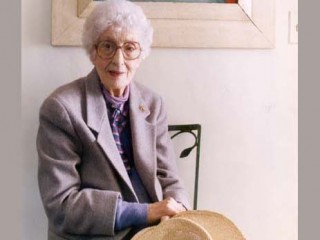
May Sarton (source; pinterest)

She became an ardent fan of May Sarton. We had one memorable summer afternoon searching for the author’s home in the tiny rural town of Nelson, New Hampshire. Having located a house that looked like the photograph in one of Sarton’ memoirs, I was sent to the front door to knock while Susan watched safely from the car. I must have passed the look test, because we were, much to Susan’s delight, invited in for a glass of sherry and then a tour of the garden. And as we were leaving my partner was given a hard to find copy of the controversial Mrs. Stevens Hears the Mermaids Sing. better mrs stevens

Yes, Susan pointed out the Chase and Duckett houses side by side on the Smith campus, named after two former faculty women rumored to have been lovers, and we visited the woman-owned Hampshire Bookshop. Still, we were largely isolated during our first two years in the Valley, referring to each other as “housemates.” At my VA job, I invented a boyfriend to shield myself from curiosity. This was not unusual at the time when discretion meant survival. It took careful, coded introductions to become part of a social network. Change only began to occur in our lives when, in 1970 I, now a sophomore at UMass, spied a personal ad in the Collegian for a meeting of the Student Homophile League. Susan later joined an Amherst Women’s Liberation support group. Unknowingly, we found ourselves on the cusp of a revolution.

Coming Next: Was there a gay subculture in Northampton before 1970? If so, what did it look like? An examination of what three different historians have discovered about post-World War II ‘Hamp that sets the stage for the coming social revolution.