Homosexual Bar Bombed in Springfield


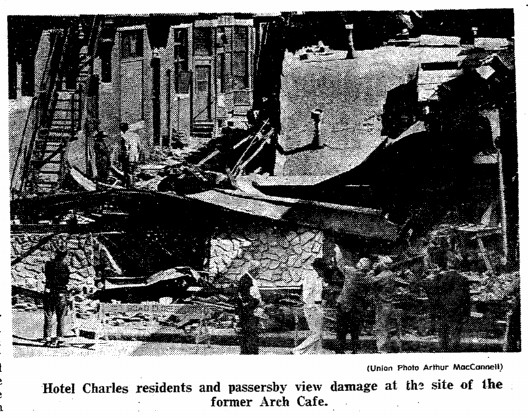
At five in the morning of Wednesday, September 12, 1973, an explosion leveled the Arch Café at 1737 Main Street in downtown Springfield. In the newspaper photo published the next day, it looks like the walls blew out and the roof lifted, broke, and then resettled onto what had just become a pile of rubble. No one was injured in the blast, but the building, which the owners estimated to be worth $90,000, was totally destroyed.

KMArchCafeSept131973
courtesy  Springfield Union Sep. 13, 1973

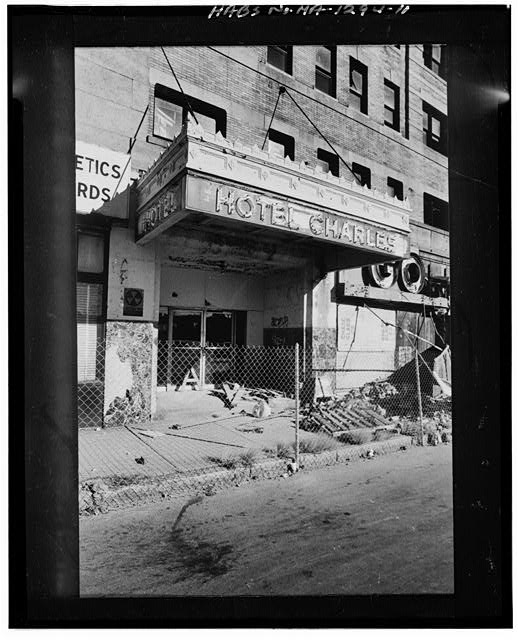
Sixty windows were blown out in the side of the Hotel Charles right next to the Café. Changes in the transportation patterns from rail to automobiles had brought the once proud Hotel to near financial collapse, but it was a handy tryst place for subcultural denizens. There was additional damage to the Army&Navy store on the ground floor of the Hotel and to the Friendly Tavern across the street.

hotel charles marquee
The Hotel Charles in its decline

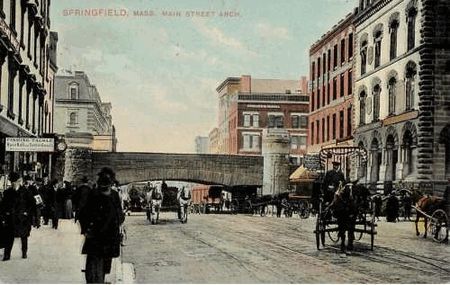
The Arch Café was named after the immense granite railroad arch that flanked the café’s south side and carried the Penn Central railroad over Main Street. The Arch Cafe was so well known to authorities that it was described in the Springfield Union as “long acknowledged as a gathering place for homosexuals in the Connecticut Valley and beyond.”  Men had previously been arrested at the café on “morals” charges, and the establishment was regularly scrutinized by the Health and Liquor Licensing Boards. Smith College professor Newton Arvin, who lived in nearby Northampton, described the Arch in his diaries as a place he cruised for casual sex in the late 1950s and early 60s. (See the previous blogpost the Scarlet Professor .)

springfield_ma_6 main st arch postcard

The incident was investigated by local, state, and federal authorities. The Arch Café had been operated for seventeen years by brothers Louis and Andrew Lake and in-law Constantine Kyros. The Lake brothers told investigators that the establishment had been plagued in recent weeks by obscene, threatening telephone calls. The reason Andrew Lake gave for not previously reporting these calls to the police was that “after a while you get used to this kind of thing.” The owner of the neighboring Army&Navy store told investigators his business had also received numerous obscene phone calls, starting two weeks before the explosion. Follow-up by police revealed that other bars with homosexual crowds had not been receiving such calls during this period.

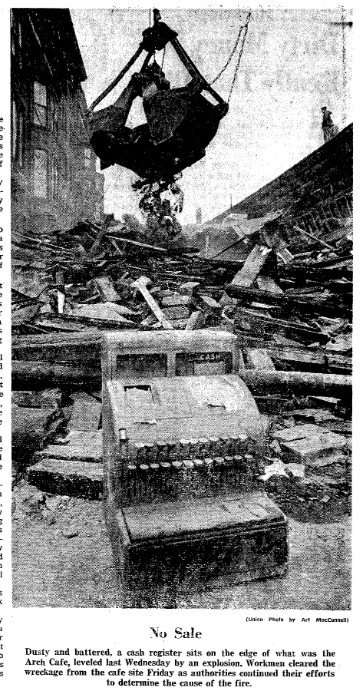
When enough debris was cleared away for the fire marshals to get a good look at the damage, gas leaks or an oil tank combustion were eliminated as possible sources for the explosion. A kerosene soaked rag that had not ignited was found on the scene. The rag, along with other forensic evidence, was sent to the state’s lab for analysis.

KMArchCafe NO SALE photoSept171973
Visible in the background are the Hotel on the left and the end of the railroad arch on the right. courtesy Springfield Union Sep 15, 1973.

Pursuing the idea that the Café might have been deliberately targeted because of its homosexual clientele, a Springfield Union reporter James Shanks interviewed Robert Dow of the Homophile Union of Boston. Dow said that his group was “quite concerned” about the Arch explosion. He added, “A number of churches sympathetic to homosexuals and gay churches in San Francisco, Los Angeles, and New York have been destroyed or damaged by fire bombings. The number of crank calls against gays increased alarmingly in the last month.”

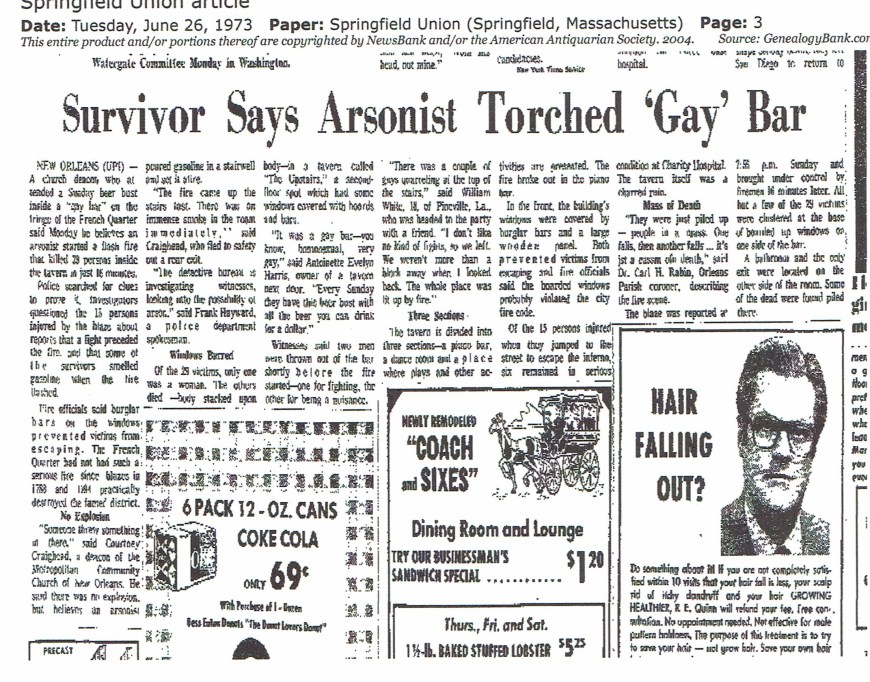
The idea of targeting “homosexuals” was not at all unlikely. Such an incident had been reported in the local and Boston newspapers just a few months previous to the Arch Café explosion.  A page three article in the June 26 Springfield Union printed parts of an Associated Press story from New Orleans about an arson fire at a “gay” bar in which twenty-nine people burned to death, with another sixteen injured as they jumped from upper floor windows and a fire escape.

nolo bar fire better02182016
Coverage of the NOLA arson that appeared in the Springfield Union June 26, 1973, courtesy of the newspaper

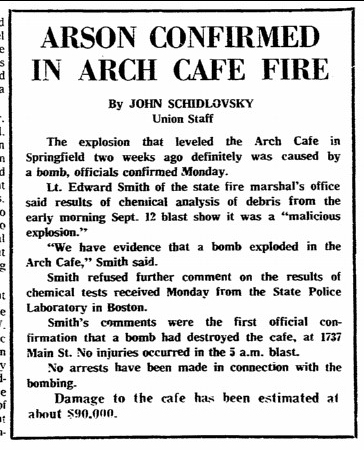
Almost two weeks after the blast the return of findings from the state laboratory helped the fire marshals determine that the Arch Café destruction was caused by a “malicious explosion” deliberately set using a homemade black powder bomb.

KMArchCafe1973
courtesy of the Springfield Union Sep. 25, 1973

With the help of federal agents, the investigation turned to trying to trace the source of the powder, a controlled substance. Months passed with no announced results, but sporadic newspaper coverage about arson in the area linked the Arch bombing to a group of other open cases of fire bombing in the Greater Springfield area.

In a May 1974 special feature on arson for profit in the Springfield Republican, Lt. Edward Smith, the State Fire Marshal, outlined the growing arson problem and described new patterns being discerned across the state as well as in Springfield. Since 1960, arson cases had tripled in the state. In Hampden County, one in eight deliberately set fires might be commissioned by property owners in order to profit from over-insurance. A representative of the insurance industry stated that they felt strongly that the syndicate or mafia was involved in this in Springfield. Neither the police nor the fire marshals would comment on this allegation except, in my interpretation of the article, to imply that arson arrests couldn’t be made without evidence against specific people and that there were an increasing number of arsons that no one was willing to talk about.

Early in the Arch Café investigation, it had been determined that the property was under-insured, since the owners were recouping only a fraction of its value. This made this case unlikely to be an example of insurance arson. Police discovered, however, that the Arch Café operators also owned the Viking Lounge, which had been the object of several bomb scares in recent months. These bomb threats had not been received at the Café. Although “no one was talking,” investigators brought the attention of journalists to a group of other unsolved fire bombings which had occurred in 1973 in the Greater Springfield area. In addition to the Arch Café, these included two trucking firms, a tenement, a pharmacy, a car, and two restaurants. The FBI was investigating some of these for a Boston connection.

No one was ever identified as responsible for setting the bomb, nor was the motive for it made clear. I have heard enough rumors of mafia control of gay bars and protection rackets in other cities to find that to be a plausible theory about what was happening in Springfield at the time. It is, of course, only speculation.  For those interested in local mafia history see Justin Cascio’s work https://mafiagenealogy.wordpress.com/2017/11/01/the-bosses-of-springfield-massachusetts/ .

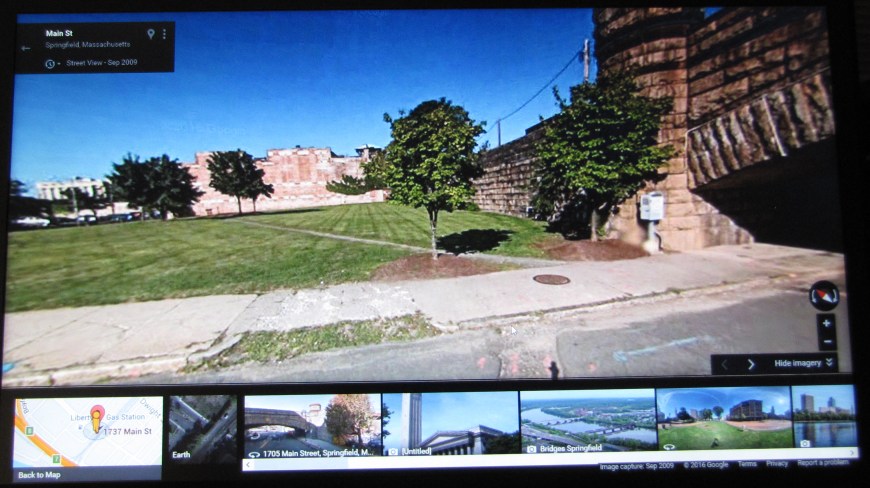
I never visited the Arch before its demise, and couldn’t find a photo of it. Google maps street view takes one along Main Street and under the railroad arch. The Arch Café would have been on the immediate right as one emerges from the arch, with the Peter Pan Bus depot, then as now, across the street. The large vacant lot, with some concrete being poured in Nov. 2015, was the site of the 400-room Hotel Charles, which had been next door to the Arch Café. The hotel was demolished after a fire in 1988.

site of arch cafe, google maps street view
1737 main street, site of the former arch cafe, 2009 google maps street view

FURTHER READING:  For more on the Maffia gay bar connection nationally see this blog by Justin Cascio https://mafiagenealogy.wordpress.com/2016/04/18/gay-liberation-and-the-mafia/

SOURCES:

__Thank you Jan Whitaker for turning me on to GenealogyBank.

__”Arch Blast Probed.” Springfield Union. Sep. 13, 1973. Springfield, Massachusetts.

__Shanks, James M. “Officials to Raise Arch Roof.” Springfield Union. Sep. 14, 1973.

__MacConnell, Art, photographer. “No Sale.” Springfield Union. Sep. 15, 1973.

__”Survivor Says Arsonist Torched ‘Gay’ Bar.” Springfield Union. Jun. 26, 1973.

__”Bars Block Escape of 29 Fire Victims.” Boston Herald. Jun. 26, 1973. Boston, Massachusetts.

__”Arson Confirmed in Arch Café Fire.” Springfield Union. Sep.25, 1973.

__”Agents Seek Source For Bomb Powder.” Springfield Union. Oct. 3, 1973.

__”Firebombing Try Probed by Police.” Springfield Union. Apr. 4, 1974.

__Andreoni, Phyllis. “Insurance Sighting In On Arson for  Profit.” Springfield Republican. May 19, 1974.

COMING NEXT: Dancing Wimmin; Lilith

Dancing Wimmin: the Deadly Nightshade


Women dancing together became a significant thread in Northampton’s Lesbian subculture and nascent community in the 1970s. Gay men had semi-private parties at the men’s collective on Butler Place in ‘Hamp. Gay dances for both men and women were held at UMass and Hampshire College. Groups of gay people would also consciously “out” themselves in straight bars in Amherst and Hadley creating gay space for a night. Dances specifically for women, however, grew out of the spreading Women’s Liberation Movement, sometimes in new venues outside of bars, and often to the music of all-women bands.

Four of the five all-women’s bands that played in ‘Hamp during the 70s were also lesbian, though not out as such. Many of the members of the Deadly Nightshade, Lilith, Artandryl, Liberty Standing and Ladies Chain had lived or gone to school in Northampton as well. While most of the bands played the local bar/dance club circuit, they also performed at feminist and lesbianfeminist benefits and events, which increasingly included women-only dances.

By 1972, feminism had spread enough in Hampshire County to be celebrated through a Five College Women’s Cultural Week, March 6-11, with events on all the campuses. Anne Bowen, who graduated from Smith and volunteered as staff at the Valley Women’s Center on Main Street in Northampton, brought part of her all-girl band Ariel out of retirement to play at a hootenanny for this celebration. Response was so positive that Anne, along with Pamela Brandt and Helen Hooke, began a new career as the Deadly Nightshade, Deadlies or DNS.

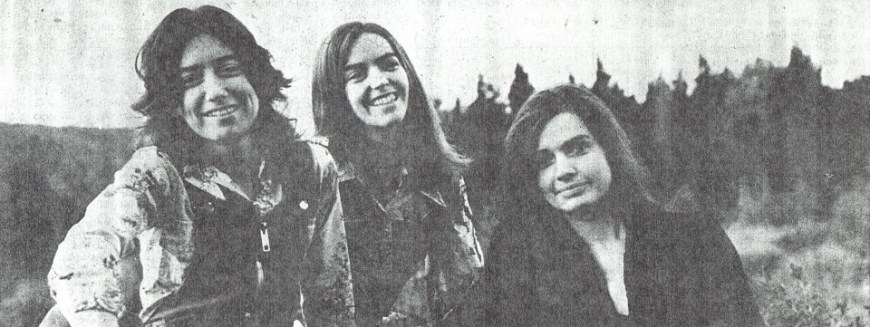
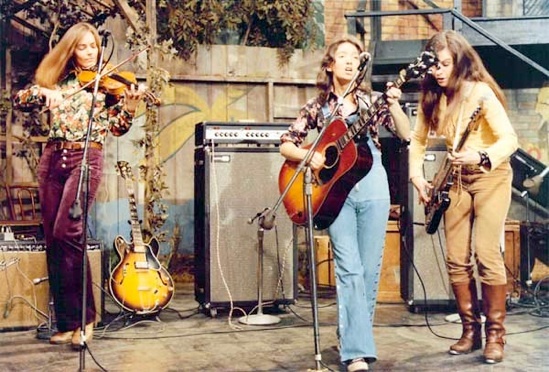
Helen, who had also graduated from Smith, played violin (fiddle) and lead guitar. Pamela, who graduated from Mt. Holyoke College and was partners with Helen, was the bass player. Anne, who had also been in a jug band, played the washboard as well as rhythm guitar. All three were to later harmonize as well on kazoos. The three lived together in a farmhouse in Ashfield.

cropped-deadly-nightshade-promo-pic10222015.jpg
Anne Bowen, Helen Hooke, Pamela Brandt


Since they wanted to be a fun dance band for any kind of venue, they initially learned between a hundred and one hundred and fifty songs, including many Motown hits. To make Texan Anne happy, they also added some Patsy Cline and bluegrass. They described themselves as an “old school pop/rock/soul/country/electric bluegrass trio.” They often began their performances with a very up-tempo Carter family song: “Keep On the Sunny Side.” Other favorite covers included “Teach Your Children” by Crosby, Stills and Nash; and “Truckin” by the Grateful Dead.

By the autumn of ‘72, the DNS was polished enough to play at the Valley’s first women’s dance, which was held at UMass Dickinson House, sponsored by Southwest (Residential Area) Women’s Center. Out lesbian Judith Katz (future Lambda Book Award-winning novelist) was the first Student Coordinator there.  In the spring of 1973, the Deadly Nightshade again played at Smith (for the Women’s Festival) and UMass, as well as at Mt. Holyoke College.

At first they wrote new tunes to fill in their repertoire, but soon they were presenting original material that was explicitly feminist, often in a humorous way. They became one of the first feminist rock bands in the country.

deadly nightshade bumper sticker10222015
bumper sticker from KM’s collection

Women who came to know the band through political events also began to show up at their straight gigs, including at the Lazy River in Northampton and another bar in Florence.

Pamela reports, “We drew an interesting mix of people. At some bars there were lots of bikers and burnt out Vietnam vets, as well as all our usual lesbian/gay feminist crowd. Fortunately, everyone got along okay. We very consciously considered it our job, as much as playing the music, to make sure that that happened. You know: ‘It’s only rock and roll,’ as the saying goes– but in a way for us, as politically-conscious musicians in a time before it became fashionable for entertainers to be political, it was exciting, even if only for four hours a night, to feel like we were the catalyst for creating a bit of a utopian world in a microcosm. That fit very well into the vibe in the Valley at the time.

km halloweenrusty scupper,w l knowles, DNS n schroede 10222015
Pamela sent me this photo taken at a straight bar in Amherst on Halloween where the Deadlies were playing: me in drag sitting next to Liz Knowles and Nancy Schroeder


The Deadlies played two or three nights a week for three years before they got a record contract with RCA/Phantom. They went on to release two LPs, “The Deadly Nightshade” and “Funky and Western.” Both albums were nominated for Grammy Best New Artist Awards.

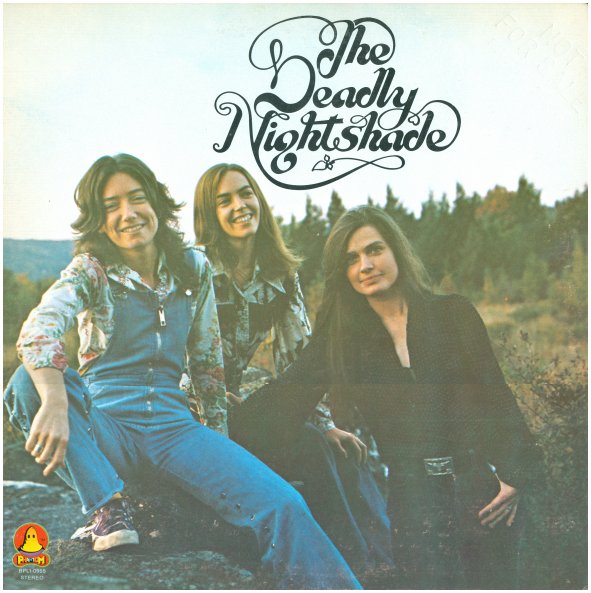
DN-LP1
their first album for RCA


They were the only all-female band in that time which signed to a major mainstream record label and still recorded songs with outright feminist content, despite RCA’s efforts to tone them down.

Pamela commented on this in relationship to their memorable song, “High Flying Woman:”

 “Well, it’s really just sort of a feminist anthem, only it doesn’t sound like an anthem. It sounds like…well, when we play it live, it sort of sounds like a country rock song, and the way it is on the first album, they made it into sort of more of a little pop song.

Words were very important to feminists in those days. Well, like the word “chick,” you were all supposed to be a woman, not a girl if you were over a certain age, because the way the words had been used in those days for men and women, even when you were 80, men would say “Hi, girls.” But they were men, you know, it was girls and men, it wasn’t girls and boys. And then chick was one of those words also, which we really hated, because as band people it was okay for women to be in bands if they were just the chick singer, for a male band. What was considered to be inappropriate was for women to actually be the band, be the players, so the whole chick thing really rubbed us wrong. So that’s what the whole song originally started out as, you’re not a chick, you’re a free-flying woman, a high-flying woman. And it sort of got more general as the song went on about how women should not be in a cage, you should set yourself free, take yourself for a glide, you’re a high flying woman.A version of it is accessible on YouTube.

The Deadly Nightshade had many memorable gigs once they were on the national circuit. One of my favorites was their appearance on Sesame Street. Watch it here as they play “Walk on the Sunny Side”!:

The-Deadly-Nightshade-Band-Sesame-Street-web-9
the Deadly Nightshade on Sesame Street

They toured nationally, so, after their early years, they were generally outside the Valley. Their last official gig was in 1977 at the National Women’s Conference. They retired after that because Anne had grown tired of being on the road.

Both Pamela and Helen continued with their music after the band retired. Helen has released four solo albums over the years  . Pamela was a member of Lowlife, a New York City mixed gay and lesbian band which existed from 1982-86, at a time when the two groups were largely separate politically.

IMA20poster207520dpi


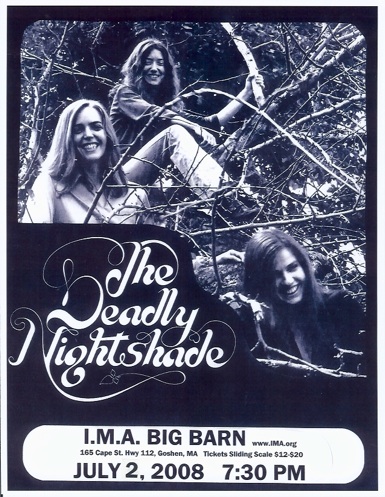
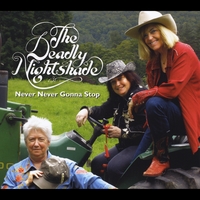
In 2008 the Deadlies had a reunion performance at the Institute for Musical Arts in Goshen, MA that drew an enthusiastic crowd of 150. Encouraged by this, they began writing new material and making more reunion appearances. In 2012, they released a cd, “Never Never Gonna Stop”, with mostly new music (described as “newgrass, modern electric blue grass”) as well as four vintage audio/video clips from 1984.


thedeadlynightshadealbum cover

A little promotion tour for the cd included the Bitter End in  Greenwich Village and Northampton’s Iron Horse Music Hall. The band had been planning a tour for 2015 which would have included Northampton, but Pamela developed knee and back problems in the spring. In August, she died unexpectedly of a heart attack at her home in Miami.

Further reading:

The Girls Next Door by Pamela Brandt and Lindsy Van Gelder (Simon and Schuster 1996) contains Pamela and Helen’s coming out at Mt. Holyoke College while in a girl-band story.

SOURCES:

__Brandt, Pamela. Email to KMR May 23, 2004.

__Raymond, Kay[marion] and Letalien, Jacqueline, editors. A Herstorical Chronology of the Valley Women’s Movement 1968-1978. Ceres Inc. Northampton. 1978.

__ The Deadly Nightshade website includes lots of the group’s history unavailable elsewhere including how they got their name. http://www.thedeadlynightshade.net/Home.html

__And their facebook page  https://www.facebook.com/TheDeadlyNightshadeBand

__ Doyle, JD. Queer Music Heritage. Radio show recorded stream and transcript interview with Pamela Brandt about the Deadly Nightshade plus lots more. An incredible resource and searchable site. March 2013. http://www.queermusicheritage.com/mar2013s.html

__Parnass, Larry. “Deadly Nightshade performs again Sunday in Northampton.” Daily Hampshire Gazette. Northampton. May 24, 2013.

Coming Next: the bar bombing


An Intense Confluence of Radical Ideas: Umass Fall 1971


The 1970 co-founders of UMass/Amherst Student Homophile League (see previous posts)  had rapidly moved into other forms of activism creating a leadership vacuum within the group. Kathryn Girard joined the Women’s Caucus of the School of Education and Michael Obligado started, with other more radical SHL members, the local Gay Liberation Front. I stepped into this opening for leadership that Autumn of 1971, editing a few editions of SHL’s newsletter the Closet Door, and ushering the group through the process of getting recognized status as a student group and student senate funding.

beter kathyrn n me04052016
Kathyrn Girard and I outside the GLF space in the Student Union basement (across from the Hatch) early 1971, photographer unknown

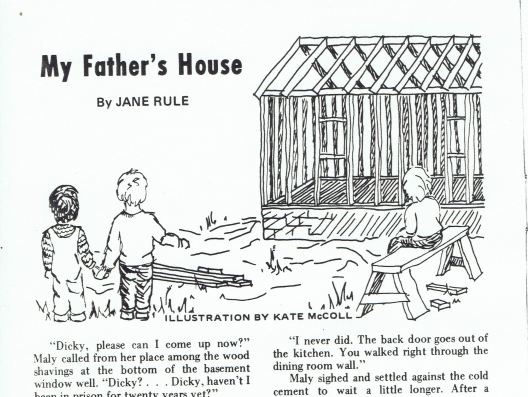
Shortly after I started going to SHL meetings in the fall of 1970, I broke up with my partner Susan  and moved into a rooming house in Northampton. I had to leave the cats and dog in her custody. In addition to a subscription to the lesbian magazine the Ladder, my partner and I had established a mutual correspondence with its editor Barbara Grier (publically Gene Damon). Susan sent clippings of relevant news and book reviews. I contributed black and white line drawings on demand that were published as illustrations under the pseudonym Kate McColl.

ladder illustration04052016
Illustration I did for the Ladder under the pseudonym of Kate McColl. I don’t have the date for this issue.

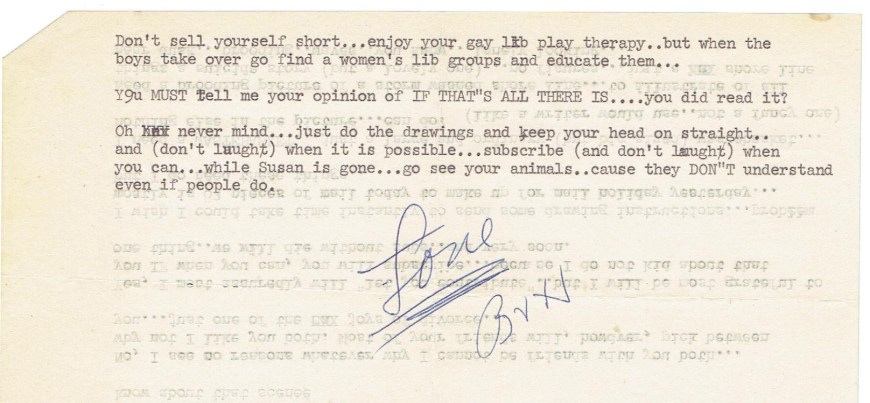
I sent Barbara a letter telling her of this change in relationship, and also about my involvement with the area’s first gay group, SHL. I think she was in St. Louis, Missouri, working as a librarian and living with a partner, Helen. Her response was, “…enjoy your gay lib play therapy.. but when the boys take over go find a women’s lib groups and educate them…”

b grier memo edited
Dictaphone memo sent to me from Barbara Grier dated 11.12.70.

It took an eventful year before I finally understood and took Barbara’s advice. I was, after all, a recent veteran out of Ohio. I was Republican (“I like Ike“) stock and older than most UMass undergrads. I looked around at freshman orientation in 1969, at the anti-war protests, hippies, and drugs, and, when surveyed by the school, projected my four year experience there would make me, in a reactionary way, more conservative. Ha ha!!

I cannot adequately describe the intense confluence of radical ideas flooding the campus (and Valley) at that time, some of which were (literally) hallucinogenic. This was a massive influx that stunned then stirred my brain into bursts of new synapses. Light bulbs turning on, indeed.

Sifting through a book of paper scraps jammed together, I see the autumn of 1971 as being pivotal, not only for my personal identity, but as a further base-laying for Northampton’s unique LGBTQ culture. Three historical developments are apparent then: 1.) An early organizational separation between gay women and gay men; 2.) a wide emphasis on radical (as opposed to reform) feminism that began receiving regular energy boosts from nationally known feminists (and lesbians); and 3.) the melding of these two circumstances that would lead to the emergence of a phenomenally strong and multi-faceted expression of Lesbian feminism.

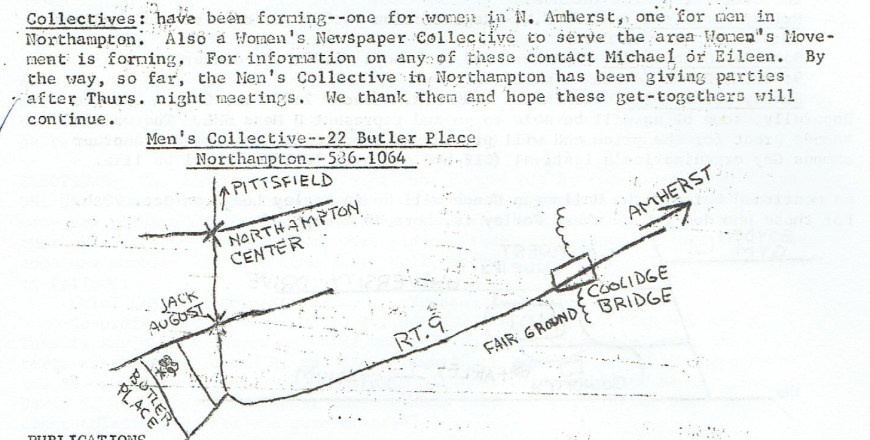
Several news items of note appeared in the October 1971 Closet Door. There are notices of the beginnings of three collectives. The women’s collective would live together in North Amherst on Leverett Road. They overlapped with another newly forming group, the women’s newspaper collective that was to produce the area’s first feminist newspaper, The Full Moon. The Men’s Collective mentioned was, in fact, gay. Michael and friends rented a large house on Butler Place in Northampton. Included in the newsletter is the invitation to attend weekly parties there after the SHL Thursday evening meetings. I think the cover charge for the parties  helped pay the rent. The guys would show off their latest drag costumes garnered from the free store at the Valley Women’s Center.

closet door collectives formedited
Closet Door SHL newsletter Oct. 1971

I am not sure how it happened but by the end of Nov. 1971 I had written a multipage report on the status of women and activism at UMass which was printed in the alternative campus paper, Poor Richard’s.  In the meantime, I came out to my mother over the phone because I was included in the first mainstream media coverage of the Valley’s Gay Movement, Dec.7 in the Springfield Union. My mother’s response was that she had read something in the Readers’ Digest and would pray for me.

gay society forms  edited
Courtesy Springfield Union published Dec. 7, 1971.
michael n me in shl office04052016
Michael and I clowning around in front of the Union photographer, Really? Print this!

I also let it be known in SHL that I would be doing less in the group as, instead, I organized a Dec. 8 first meeting of the Gay Women’s Caucus. The space advertised was JQA lounge near the brand new Southwest residential area Women’s Center, in what, I heard, was a former janitor’s closet. The Caucus was the foremother of the UMass Lesbian Union. The attendance was small and my memory needs to be refreshed by others (Jane? Dale?), but my recollection is that the small size and very wide range of interests meant we mostly met socially with each other rather than suggested potlucks or CR/study/action groups. It was a clear statement, however, that gay women had needs separate from gay men, something that other women outside SHL may have already concluded as they joined feminist groups on campus or Amherst Women’s Liberation.

first mtg gwc ad04052016
schedule of events at the end of 1971 published in an article I wrote in Poor Richard’s


The year ended for me with euphoria when nationally known feminist and poet Robin Morgan spoke at UMass as part of the Distinguished Visitors Program. (I would like to know who orchestrated this major funding coup.) Addressing a capacity crowd of mostly women in the Student Union Ballroom, she focused on the current state of radical feminism in the U.S. It was the first of many solo appearances by Robin in the Valley. She had previously visited the Smith Campus at the invitation of undergraduate Sandy Lilydahl in 1968 as part of WITCH, Women’s International Terrorist Conspiracy from Hell.

I fell in love with Robin when she refused to take questions from men after the lecture. I also loved her handling of a student reporter. A few of us sat with her in the campus center coffee shop afterwards, where a male from the Collegian persisted in asking her questions.  My mouth must have dropped open when she told him to “stick his prick in his mouth and sew it shut.” Oh my!

robin at umass 7104052016
Photo caption reads “Robin…makes a point about why she feels women.” Massachusetts Daily Collegian Dec. 15, 1971. My guess is that since Robin wouldn’t talk to male reporters they finally got it and allowed a woman to report. From my scrapbook.

A few days later a (first) regional women’s conference was convened at UMass by the Leverett Rd. Women’s Collective. Among the ten scheduled-in-advance workshops was a “gay” one, facilitated by yours truly. Little did I anticipate the explosion of political activity I would be swept into over the coming decade, except I knew it would be with women, with sisters.

regional womens conf 7104052016
First (?) regional women’s conference 1971.

Sources:

__ McColl, Kate. Illustration. The Ladder. Circa 1970-71.

__Grier, Barbara. Memo note to Kay Raymond. Dated 11.12.70.

__Closet Door, newsletter of the Student Homophile League, UMass Amherst. Oct 1971.

__Bradley, Jeff. “Gay Society Emerging on UMass Campus.” Springfield Union. Dec. 7, 1971.

__Raymond Kay M. “Part II. The Other 42%.” Poor Richard’s: a Weekly Magazine. UMass Amherst. Dec. 3, 1971.

__Spencer, Buffy. “Ms. Morgan Says Women’s Movement Alive.” Massachusetts Daily Collegian. Amherst. Dec. 15, 1971.

__Raymond, Kay(marion) and Letalien, Jacqueline, editors. A Herstorical Chronology of the Valley Women’s Movement, 1968-1978. Ceres, Inc. Northampton. 1978.

__Flyer, mimeographed. Regional Women’s Conference.  UMass Amherst. Dec. 17-19, 1971.

“T” is for…


The UMass Student Homophile League got a cubicle next door to the Students for a Democratic Society to use as an office on the mezzanine of the Student Union. Stopping in between classes became a habit of mine even though it was mostly gay men who were hanging out. It was here I first heard the word “T-room.” Since, in context, I understood it to mean that the men were going to cruise the Goodell Library restrooms for casual sex, I thought the “T” I was hearing meant “toilet.”

Only decades later, upon reading Jan Whitaker’s Tea at the Blue Lantern Inn, did I come to understand the “T” was “tea,” and that cruising the “tearoom” was very old American gay vernacular, the origins of which had been lost over time. Not only that, but Jan, a Northampton resident as well as a restaurant historian, had discovered an example in the city of the early 1900s Bohemian tearoom phenomena that, like others of its type, may well have been cruised by men we would today call gay. Whether the men were there or not, we know that the tearoom which was enormously popular with women was run by a gender bender former actress who had passed through NYC.

cropped-rose-tree-inn-11.gif
Postcard of the Rose Tree Inn (courtesy of Jan Whitaker)

For fifteen years, 1908-1923, Madame Anna  deNaucaze ran Ye Rose Tree Inn at 252 Bridge Street. Madame  had several different women partners in the business. Like many other tearooms of the time, the Rose Tree Inn introduced the dining public to a setting with special décor and food that was a great improvement over the usual hotel or tavern meat and potatoes fare. Well-prepared fresh ingredients were featured. Salads and sandwiches were introduced for lunch. There was also afternoon tea, sumptuous six-course dinners and extravagant deserts. Above all, tearooms like the Inn were mostly women-run and, for the first time in the U.S., provided a welcoming place for women unaccompanied by men. In fact, according to Whitaker, “real men” didn’t generally eat in tearooms, perhaps because they were uncomfortable on women’s turf.

In addition to being the province of women, a genre of tearooms became popular in Bohemian Greenwich Village. These even more exotic venues gained a reputation for welcoming those outside the new heterosexual norm, as well as other social mavericks. While we have lost the presence of such dining/lounging establishments, gay lore has retained the use of the word “tearoom” to designate places worth strolling through to look for kindred souls.

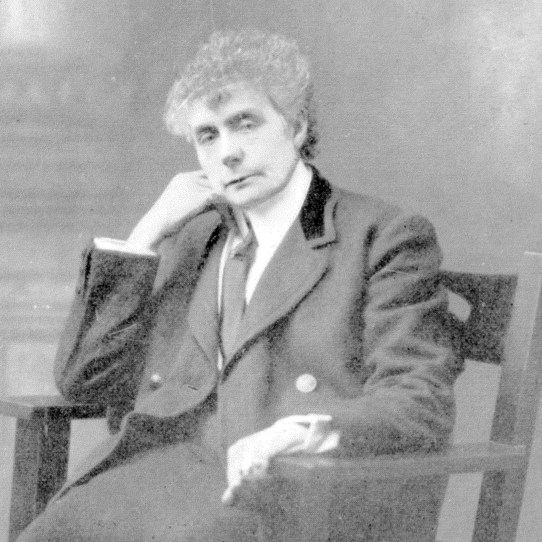
In Northampton, the Rose Tree Inn proprietor A. dN., as she signed herself, was such a maverick, and so was subject to local criticism. She has been described by a Smith College student as wearing “mannish suits and stiff collars” and that “there is a mystery surrounding her. No one knows if whether it is a man or a woman.” Although no alcohol was served at RTI, she is recalled as visiting Anna Bliss, an unmarried woman friend living down the street, where behind drawn shades, they would share some port and a cigar. According to the stories Bliss told her nephew de Naucaze also lost a lot of money gambling in  Monte Carlo one summer.

naucaze
Anna deNaucaze, 1919 Smith College yearbook paid ad (courtesy Sophia Smith Collebction, Smith College, Northampton MA)

In 1910, she came to the defense of her Inn and others, by publishing a newspaper entitled, 4ALL: They Say- What They Say?- Let Them Say.  In decrying townspeople who spread rumors about the Inn and her customers, she said, “Nor do I wish to blazen forth the weakness of any individual picked up on Main Street, limp of limb and thick of speech. Neither do I desire to spread scandals…I shall at all times be delighted for the sake of truth… I have no use for people who talk through their hats and veils, protecting themselves with their hatpins to the detriment of their neighbors.”

The former New York City actress moved to the area in 1907. After briefly trying to run a tearoom in Goshen, she packed all her pots and pans into a horse-drawn wagon and moved to Northampton. She and Marie VonVeltheim (aka the Countess), who was a painter of miniature portraits, bought a 200 year-old farmhouse on the edge of town from an Irish family.  This became the Rose Tree Inn.

The Inn opened in December of 1908. It rapidly became popular with Smith College faculty and students. Perhaps because so many of its customers were on an academic schedule, the Inn was closed during the summers. In an entrepreneurial spirit, deNaucaze also owned, for a brief time, a summer Rose Tree Inn in Maine, and two “annexes:” the Rose Tree Hut on Arnold Avenue in 1918 and the “Queer and Quaint” Rose Tree Den on Masonic Street in 1919.

Contemporary accounts credit her personality as being as great a draw as the Inn’s fine food. Her wit and intelligence are repeatedly noted. Many Smith faculty visited in her book-lined “den” at the Inn to exchange views. She was unpopularly outspoken about many contemporary affairs.  She was against women’s suffrage, vehemently anti-German, and in favor of America joining the Great War, now known as World War I. This latter opinion, she felt, was the reason she was eventually forced to close the Inn.

No mention of a “Monsieur” deNaucaze has been found, and she refused to tell the 1910 Census taker if she was divorced. A friend recalled that A.dN. had been born in Belgium to the Irish Montgomery Moore family, was educated in Paris, married, and had a son.  This same friend said that when A.dN. began her stage career, she had adopted the deNaucaze name from an aunt who was an actress in Paris. The Countess probably lived with her at the Inn until 1912.  Kate Sangree joined the Inn partnership in 1919. In 1923, “Mrs.” Sangree and deNaucaze were planning to adopt an infant girl that had come into their care in some unspecified way.

Although A.dN. cited other issues as well, being popular with Smith students seems to have led directly to the demise of the business. In order to serve students, establishments had to be on the College’s approved Warden’s list. DeNaucaze was variously forced to prohibit dancing, smoking, and drinking.  She was also required to provide a “matronly” cashier to act as chaperone at her places of business. In 1923, despite student protest, the Rose Tree was dropped from the Warden’s list of places approved by the College, allegedly because students had been smoking there. The resulting loss of business forced Madame, at age 69, to sell the Inn. She moved briefly to Maryland and then to New York City where she died a year later of pneumonia.

Even under a new woman owner, the Rose Tree Inn wasn’t able to regain Smith College approval. In 1928, the Rose Tree Luncheonette became the Rose Tree Filling Station. Today, what remains of the original structure houses Duffy Tire. An unsuccessful attempt was made in 1989 to preserve and restore the building as the Inn.

9479061_origduffy tire
The current use of the former Inn at 252 Bridge St. (Google map street view)


Further reading: See more on the Inn

__at Jan Whitaker’s restauranting history blog   http://restaurant-ingthroughhistory.com/tag/roadside-restaurants/page/2/

__The building has been inventoried as a historic site

http://www.northamptontimelines.org/bridge-street-252.html

__ Elizabeth Kent presented research in 2012, http://www.therainbowtimesmass.com/2012/03/01/northamptons-lgbt-ancestor-anna-de-naucazes-story-intrigues-inspires

__and in  again in 2015

http://www.historicnorthampton.org/rose-tree-inn.html


Sources:

__Whitaker, Jan. Tea at the Blue Lantern Inn: A Social History of the Tea Room Craze in America. 2002. St. Martin’s Press, New York.

__Pease, Kathleen. “Rose tree: Local historians seek to save inn built in early 1700s.” Daily Hampshire Gazette. March 18, 1989.

__Murray, Clarence. “Reminiscence of what told by Anna Catherine Bliss, friend of A. dN.. 1987.” This is a handwritten account by Bliss’ nephew of stories told him by his aunt. Historic Northampton.

__DeNaucaze, Mme. Anna. “Baby at ‘Rose Tree” not Kidnapped.” Daily Hampshire Gazette. Sep. 1, 1923.

__”Madame De Naucaze sells ‘Rose Tree.’” Daily Hampshire Gazette.  Sep. 7, 1923.


Coming Next: autumn 1971


News of fromwickedtowedded


My intrepid writing coach just came home from a month in a castle in Scotland and kept applauding  yesterday as I updated her on the last ten weeks in the life of this little fw2w blog. Much, beyond the most visible appearance of five new blogposts, has occurred_ none of it anticipated, and she thought some of you might be interested in knowing of these inner happenings.

cropped-hampshire-bookshop.jpg
Hampshire Bookshop at the top of Crafts Avenue (Courtesy Historic Northampton)

This is the last week to see in person the Hampshire Bookshop exhibit at Smith College. The display in the Mortimer Rare Bookroom of Neilsen Library closes at the end of February. It was a delight to be able to look at photos of Marion Dodd and others as well as publications of the Shop that I had only read about.  A visit here would combine well with a look at the Kathe Kollwitz exhibit at Smith’s Art Museum. Free parking is usually found along Elm Street.

I say “see in person” because this HBS exhibit is going to be digitized and made available online. It was in regards to this, a request for permission to publish from Smith Library, that I learned that fromwickedtowedded has been included in the show, printouts of the blog post on the HBS displayed as examples of its “Legacy” alongside photos of the Hestia Mural downtown that includes HBS founder Marion Dodd.

Thanks to Mt. Holyoke archivist Debbie Richards regular retweeting of the blog posts to LGBT archivists the post “Intro to the 1970s” reached Dyke, a Quarterly, which reposted it, generating some discussion, new following, and record “views.” Artemis Crow commented, “As queer space becomes increasingly hostile to lesbians, these old lessons on how we organized on our own become so much more valuable.” That fw2w post was also included by editor Judith Sara in the December 2015 online issue of the Valley OLOC newsletter. Thematically focused on Lesbian Herstory, the OLOC newsletter also included info about the blog and a photo and article about Green Street by Kathy SanAntonio.

arson confirmedheadline

On the research front, I found a story about a Springfield gay bar owner who had to go to the emergency room to get eighteen stitches in his arm because he tried to break up an argument in the bar and got attacked with a nail file. Local restauranting historian Jan Whitaker  responded to fw2w’s request for more information on the Springfield bars with a lot of data she found on GenealogyBank, a searchable database that includes the archives of the Springfield newspapers. Thanks to her encouragement I subscribed to this service, handy for those of us with no academic database access, and have been researching news coverage of  the bombing of a Springfield gay bar. I also learned who to contact to (successfully) obtain permission to republish the very first news coverage of the Gay Movement in the Valley.

dojo flyer 1977

More recently, the blog Only in Northampton posted a flyer for the Nutcracker Suite, a 70s lesbian enterprise, asking for information on behalf of a friend of a friend. An out-of-state professor (who has a double-focused doctorate in what we used to call women’s studies and phys. ed.!) is interested in 70s feminism and its connection to women’s self-defense and martial arts. I’ve shared with her the factual chronology I have on this and forwarded her query letter to those I know were part of that history. If you or anyone you know was part of the Nutcracker, student or teacher, please let me know so I can pass on more info to you and the professor, including how she may contact you if you wish.

This little flurry of first time audience feedback, connection with other enthusiasts and the accomplishment of some new publishing procedures has been very exciting and affirming. Did I say surprisingly gratifying? Back to regular posts soon. Coming next;  “T” Is For…